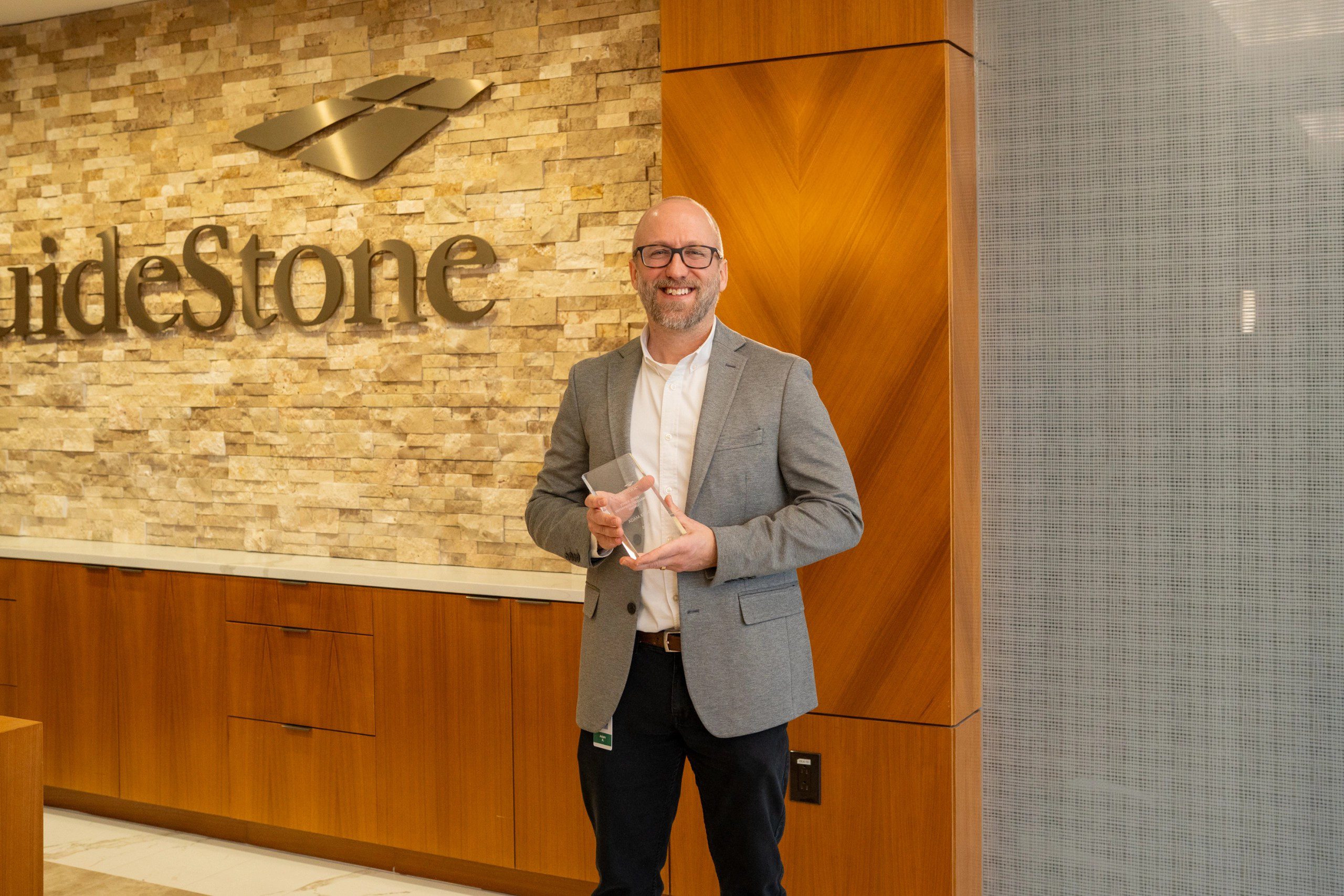
When GuideStone members face a medical diagnosis, a confusing claim or an overwhelming season of uncertainty, they often seek more than answers — they want reassurance, clarity and someone who will walk alongside them. For Adam Kegg, that moment of uncertainty is frequently where his work begins.
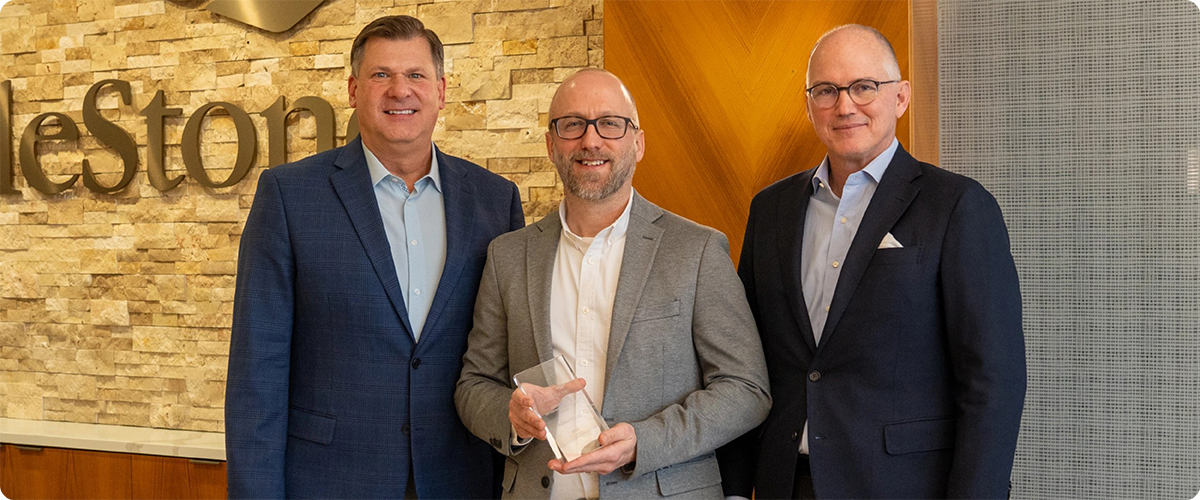
Adam, the recipient of this year’s John R. Jones Enterprise Excellence Award, serves members in a role that is difficult to summarize with a title alone. At its heart, his work is rooted in advocacy — meeting members in some of life’s most vulnerable moments and helping guide them forward with compassion and care.
The John R. Jones Award recognizes an employee who exemplifies intentional ministry service coupled with strong business practices. The award is named for retired Chief Operating Officer John R. Jones, whose legacy continues to shape GuideStone today.
We recently sat down with Adam to talk about his journey, his calling and how his work reflects GuideStone’s vision and mission.
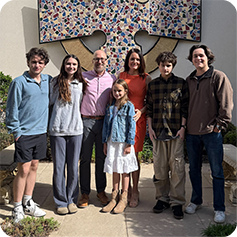
I grew up in the Dallas-Fort Worth area — specifically in Garland — and later moved to North Richland Hills, where I’ve lived since about 2009. I really love the mid-cities area. I’ve been with GuideStone for about three and a half years, but I’ve been a nurse for just over 21 years. I attended Baylor University’s nursing school and began my career at Baylor University Medical Center’s Dallas campus, working primarily in trauma ICU.
I’m married and have five kids — one in college, three in high school and our youngest is in fourth grade.
We attend First Baptist Hurst — now called First Hurst — and it’s a GuideStone ministry partner church. I recently became a deacon and serve as the director of our adult Bible study class. My wife and I coordinate the class together, helping keep people connected and supported. I’m also the nurse for the church safety team, and I help in other areas as needed.
What’s been especially meaningful is that people at church know where I work and will ask questions about their benefits. I genuinely enjoy being a resource for them. My role at GuideStone really does bleed into my personal life, and I’m thankful for that.
A lot of my time is spent with my family — going to games, events and all the extracurricular activities that come with having kids at every stage of life. Outside of that, I play ice hockey and referee. Being on the ice is how I recharge. I even play on a tournament team with firefighters and police officers in a “Guns and Hoses” league, which is a lot of fun. They call me a “third responder”.
I had spent nearly 25 years in the hospital system — since I was 17 years old — working nights, weekends and holidays. Sometimes I’d work 60 to 70 hours a week. I loved it, but with five kids, I realized I wasn’t able to be as present with my family or as involved in church as I wanted to be.
A friend who had worked at GuideStone for many years told me about an opportunity here and said, “How would you like to have nights, weekends and holidays off and be home with your family?” The timing was right, and God really opened the door. It felt like the right next step.
I started in my current role and have been in it since day one. My work involves a strong focus on advocacy, claims review and working across teams to provide a clinical perspective.
My official title is Utilization Management & Review Manager. While utilization and review are a small part of what I do, the heart of my role is clinical advocacy, helping members navigate some of the most difficult moments of their lives.
I use data, reports and referrals from across GuideStone — from claims, the call center and other teams — to identify members who may be experiencing a medical crisis. That could be a new cancer diagnosis, repeated hospitalizations or sudden spikes in claims that may indicate that someone needs help.

Once I identify someone, I reach out the same way I would if I were walking into a patient’s hospital room. I don’t lead with paperwork or policy. I lead with, “How are you doing? How can I help?” From there, we work through what matters most to them — finding the right care, connecting them to benefits or just helping them understand next steps. I always end by asking how I can pray for them, which often surprises people because they think I’m part of a “health plan”.
I love connecting with members, building trust and helping them get better health outcomes. People are often overwhelmed, scared or unsure where to start. Being able to walk alongside them and bring clarity, compassion and encouragement — that’s incredibly fulfilling.
Working the Wellness Booth at the SBC Annual Meeting is one of my favorite experiences because I get to help people face-to-face. Last year, we saw nearly 950 people come through the booth.
One situation really stands out. A pastor came through with a dangerously abnormal heart rhythm that had been going on for weeks. He had ignored the alerts because he was focused on ministry responsibilities. We were able to assess him and send him to the hospital immediately. That kind of moment — where timely intervention truly matters — reminds me why this work is so important.
Then David knew that the Lord had established him as king over Israel and had exalted his Kingdom for the sake of his people Israel.
I love the theme because it keeps the focus where it belongs. My work is almost entirely member outreach, so that theme re-centers me. It reminds me why I do what I do. We’re not here for recognition or personal success — we’re here to serve the Lord and his people.
Hearing that theme for the first time made me ask what Bible verse drives me personally. So, I found Isaiah 42:16 (CSB):
I will lead the blind by a way they did not know;
I will guide them on paths they have not known.
I will turn darkness to light in front of them
and rough places into level ground.
This is what I will do for them,
and I will not abandon them.
Obviously, this is God talking about how he leads us, but I feel like it’s also what I’m supposed to do here at GuideStone. To me, this verse really defines advocacy — being a guiding light “for the sake of his people.”
Stewardship isn’t just about finances — it’s about people. There are roughly 93,000 members on our health plan, and I see that as a responsibility to care for God’s people.
That includes direct advocacy with members, as well as indirect stewardship — working with product teams, identifying gaps in care and reviewing claims for waste or errors. When we recover wasted dollars or correct billing issues, that’s money that can be redirected to bless other families and further the mission.
One example involved my review of a medical procedure that had been administratively denied and resulted in a member paying thousands of dollars out-of-pocket. After reviewing the claim, I realized a single diagnosis code had been omitted. I worked with the provider to resubmit the claim correctly, and the member received a reimbursement of over $2,000.
She later told me how significant that money was for her family. Moments like that are tangible reminders of how advocacy can truly bless people.
I’m slowly working on my MBA, but right now our focus is on our family. With kids in elementary school, high school and college, it’s a very busy season. We’re trying to be present and faithful in the day-to-day.
Many of the members I talk to are so focused on serving others that they neglect their own health. I’d encourage members to be intentional about caring for themselves. It can feel selfish, especially in ministry, but it’s necessary. You can’t take care of others if you’re not taking care of yourself.
Thank you, Adam, for your excellent service to GuideStone members as an advocate for the sake of God’s people.
April 11-13, 2027 | Dallas, Texas
The Summit is a two-day conference designed specifically for HR and benefit decision-makers from churches, ministries and nonprofit organizations.
Use code GSMAG to get 20% off registration.

 Article