How to Choose a Health Plan

Share:
A husband and wife sit together with a laptop and paperwork to compare personal health plans.

There’s no one-size-fits-all health plan for everyone. That’s why we’ve developed six steps to choosing a health plan that balances affordability with your health needs and life stage.

1. Evaluate What Matters Most

As you consider your plan options, weigh the following factors:

  • Enrollment: Find out when you qualify for enrollment. This could be during open enrollment (usually begins in November), when you start a job, lose coverage or experience a qualifying life event such as marriage. For GuideStone® plans, review Personal Plans eligibility and enrollment guidelines.
  • Cost and coverage: Do the plan’s costs fit into your budget and cover your health needs? (We’ll explore this in detail below.)
  • Reputation: While cost is an important factor, don’t decide by that alone. Consider the company’s strength and reputation also. You can research complaints here.*
  • Medical networks: To find out whether a provider or facility is considered in-network, ask if they are contracted with the plan’s network. You can also contact the carrier to check on the provider’s network status. Also, learn how out-of-network costs are calculated.
  • Prescription medications: Learn how coverage works if you anticipate needing prescription drugs. Do costs apply to the deductible? Or are prescriptions covered with co-pays? Is your pharmacy of choice considered in-network?
  • Mental health: Does the plan cover mental health services?
  • Values: Does the plan align with your values? For example, GuideStone offers church plans designed with biblical values in mind.
2. Estimate Next Year’s Health Care Costs

Look at last year’s health care expenses, including:

  • Health care provider office visits
  • Prescription medications
  • Medical procedures
  • Surgeries
  • Hospitalizations
  • Medical equipment
  • Other health care costs

Then, consider any changes that you foresee in the following year. Do you plan to start a family? Will you soon be an empty nester? Do you anticipate needing a costly medical procedure? Will you begin a maintenance medication?

3. Understand Your Deductible

The deductible is the amount you pay out-of-pocket before your plan’s co-insurance kicks in. The lower the deductible, the more the health plan typically costs.
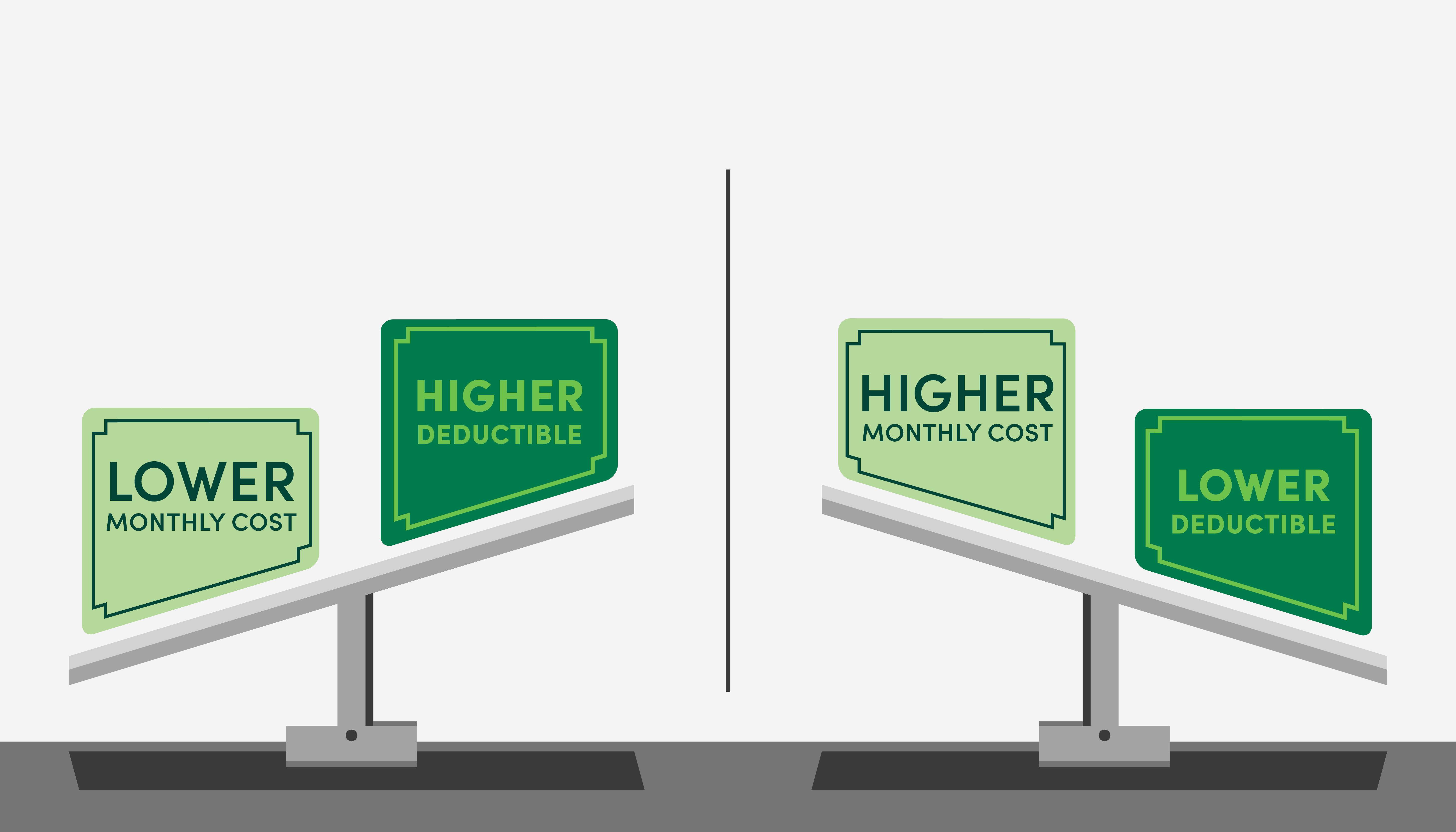
A scale illustrates a lower deductible on the lower end of the scale, and a higher deductible on the higher end of the scale. 

If you rarely meet your health plan’s deductible, consider selecting a higher-deductible plan. The monthly cost will be lower, and you won’t pay for coverage you may not need.

To determine the deductible that best fits your needs, ask yourself:

  • Will I likely have a procedure that would apply to the deductible?
  • How much would I save on monthly costs by moving to a higher-deductible plan?
  • Could I set aside savings from my monthly costs to pay for the higher deductible?
4. Consider Your Co-insurance

The co-insurance is the amount your plan pays for eligible services after you meet your deductible.

For example, a plan may have 80%/20% co-insurance. This means that after your deductible is met, the plan will pay 80%, and you’ll pay 20% of future costs. (Plans have a maximum out-of-pocket amount that limits how much you can spend on in-network eligible medical expenses in a year.)

If you don’t usually meet your annual deductible, the co-insurance is a less critical factor. If you do usually meet your yearly deductible, consider your estimated portion of the co-insurance.
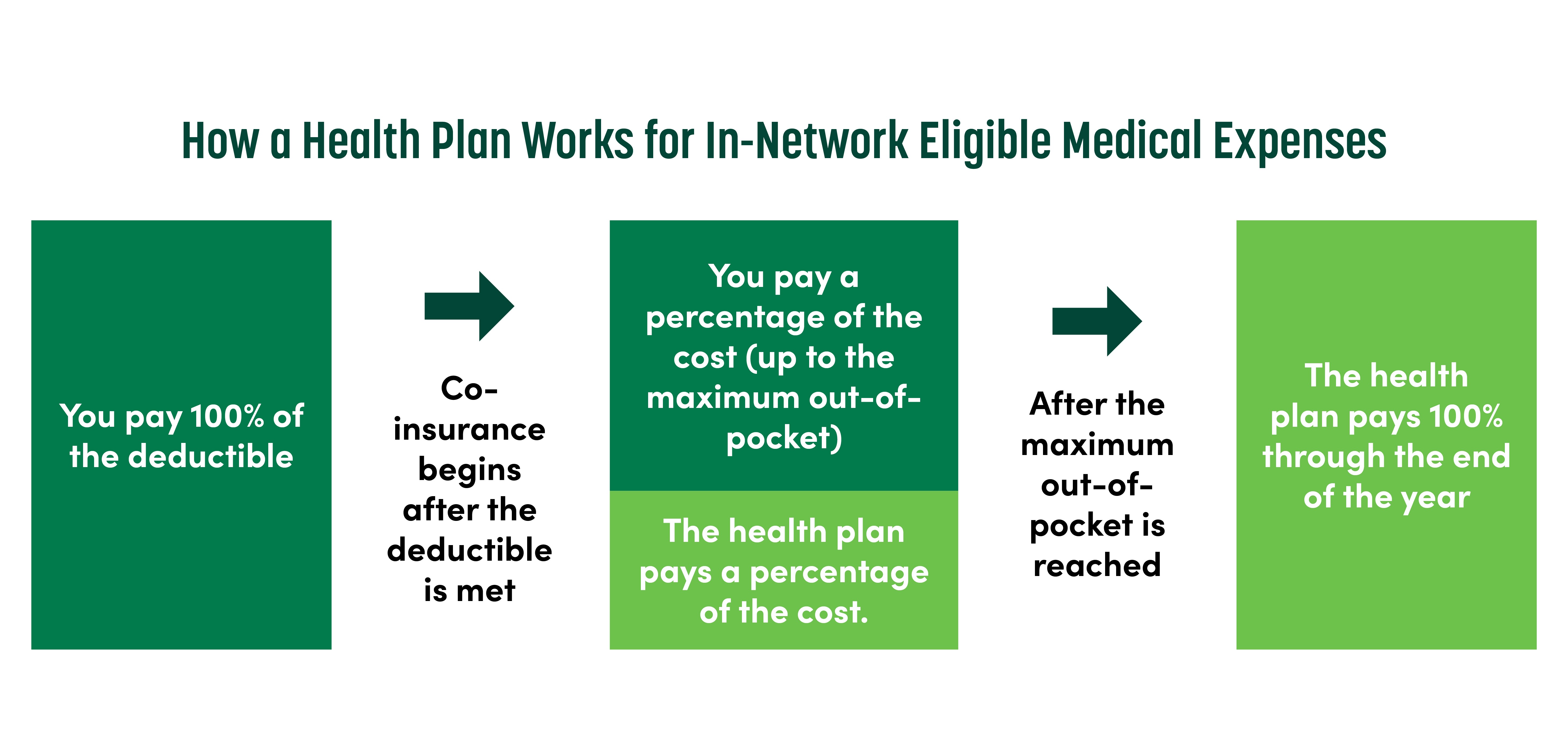
A step-by-step graph illustrates the progression of cost responsibility between the health plan member and the health plan.

5. Calculate the Annual Cost of Coverage

To determine a plan’s annual cost, multiply the monthly rate by 12. But remember, this is the cost of having the plan, not using it. You’ll pay this fixed amount each month regardless of whether you’ve used health care services.

6. Calculate the Total Cost

Now, determine the total cost to have the plan and use it.

Deductible + Co-insurance + Annual Cost of Coverage = Total Cost

Minimize Health Care Costs After Plan Selection

Once you’ve selected and enrolled in a health plan, explore ways to minimize costs:

  • Take advantage of preventive care, such as eligible routine screenings and exams, at no additional cost when using in-network providers and facilities.
  • Use a Health Savings Account (HSA) to set aside tax-free money to pay for qualified medical expenses (requires enrollment in an HSA-qualified High-Deductible Health Plan (HDHP)).
  • Understand your rights against surprise medical bills.
  • Know where to go for care based on your medical condition.
Get More Help Understanding Health Plan Options

Choosing a health plan can be challenging, so we’re here to help. If you’re considering a GuideStone health plan, call us to walk through your options together. For more information, contact us at Insurance@GuideStone.org or 1-844-INS-GUIDE (1-844-467-4843), Monday through Friday, from 7 a.m. to 6 p.m. CT.


GuideStone welcomes the opportunity to share this general information. However, this article is not intended to be relied upon as legal advice, tax advice, or medical advice, diagnosis or treatment.

*Content.NAIC.org/cis_consumer_information.htm