 Article
• Apr 15, 2026
Article
• Apr 15, 2026 How to Talk to Your Spouse About Money: Conversations for Engaged or Newly Married Couples

Engaged couples and newlyweds know that a perfect wedding day doesn't happen without lots of planning. But some couples fail to plan their finances as carefully as they plan for the big day. Whether you’re engaged or newly married, it’s important to learn how to talk to your spouse about money sooner rather than later.
Sadly, money is the most frequent argument for 41% of couples carrying consumer debt. Younger generations are entering marriage with more debt, a trend that has been rising compared to previous generations.1 Given these known difficulties, it’s best to strive toward overcommunicating about money, at the risk of not communicating enough.
To help you and your spouse feel confident talking about finances, consider these 10 discussion points that put God and his word at the focus:
Proverbs 3:9 states that you are to “Honor the Lord with your possessions and with the first produce of your entire harvest.” (CSB)
In addition to tithing, consider how often and how much you and your spouse hope to give toward your home church and other ministries.
Share your current money management habits with your spouse or spouse-to-be. Be honest about your tendencies. For instance, are you a spender or a saver, or do you fall somewhere in the middle? Learning to jointly manage your finances will require each of you to play to your strengths and be realistic about your weaknesses.
The earlier you plan for your golden years, the better. If your employers offer retirement savings plans, make sure you are saving at least enough to get any employer match (if offered). Make plans to increase your contributions each year until you reach your desired investment level.
What financial goals will you set as a couple, and which will you work toward first? Do you want to buy a house? Take an overseas mission trip together? Expand your family by having kids or adopting? Discuss your goals and map out a plan to reach them. Consider using the S.M.A.R.T. goals method to create a clear plan together.
As a married couple, you'll each maintain individual credit scores, but your financial lives will be intertwined. One person with an unfavorable credit history can jeopardize joint accounts, such as mortgages and car loans. Develop a plan to build your individual scores before opening joint credit accounts.
Each person should bring a list of his or her debts and other financial obligations, including credit cards, student loans, medical bills, car notes and mortgages, to the discussion.
Understanding your responsibilities and setting your financial goals will help you build a plan for stewarding your financial resources. If you need help creating a budget, choose one of the popular budgeting programs, such as the FaithFi™ app. You can also refer to the 50/20/30 rule to help you categorize your income.
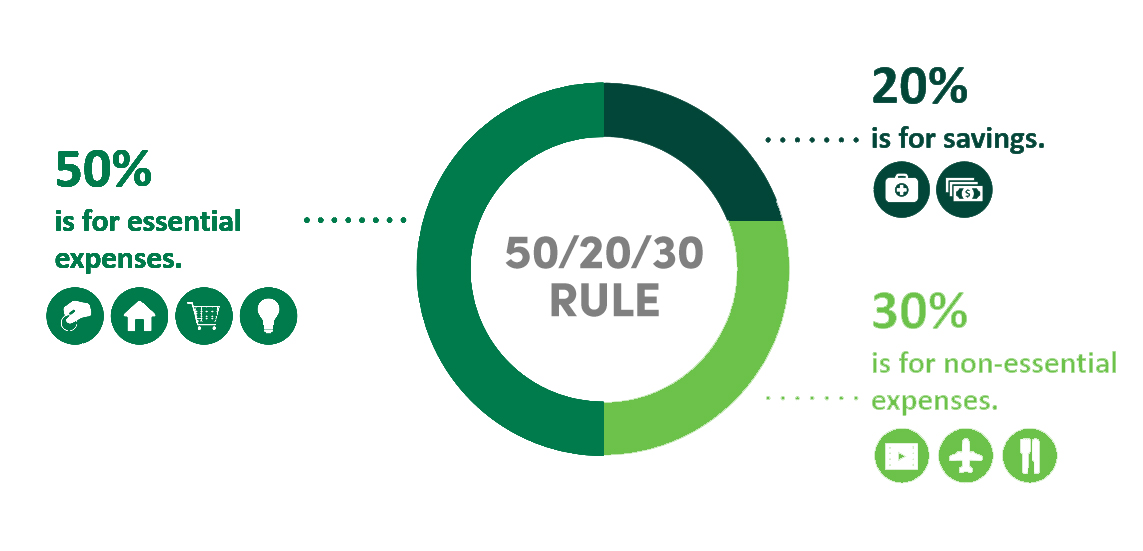
Who will be responsible for paying the bills, reconciling the checking account and monitoring investments? Some couples are comfortable with one person handling all the tasks, while others prefer to divide them. Agree on what works for you.
Enroll as a couple in a financial management class. Your local church or community center is a good place to look. American Consumer Credit Counseling also offers a variety of on-site classes and webinars.
Schedule time on the calendar to serve as a reminder to conduct a financial checkup. Your list of discussion items and frequency will change as you purchase a home, raise children, advance in your career and assume responsibilities for aging parents. But even when life gets busy, your checkup needs to be a priority. Remember that, if you are a GuideStone® member, you can set up a check-in with a GuideStone financial consultant2 in MyGuideStone® to ask general questions, review your retirement readiness and much more.
Strong communication is an important key to a strong marriage. Learning how to talk to your spouse about money now can help you create a strong financial foundation on which to build a happy, long-lasting relationship that honors the Lord with your finances!
For more information, contact us at Info@GuideStone.org or 1-888-98-GUIDE (1-888-984-8433), Monday through Friday, from 7 a.m. to 6 p.m. CT.
1RamseySolutions.com/relationships/money-marriage-communication-research
2GuideStone financial consultants provide financial education and do not provide investment advice. Financial consultants are not investment advisor representatives licensed or registered by or with any state or the SEC.